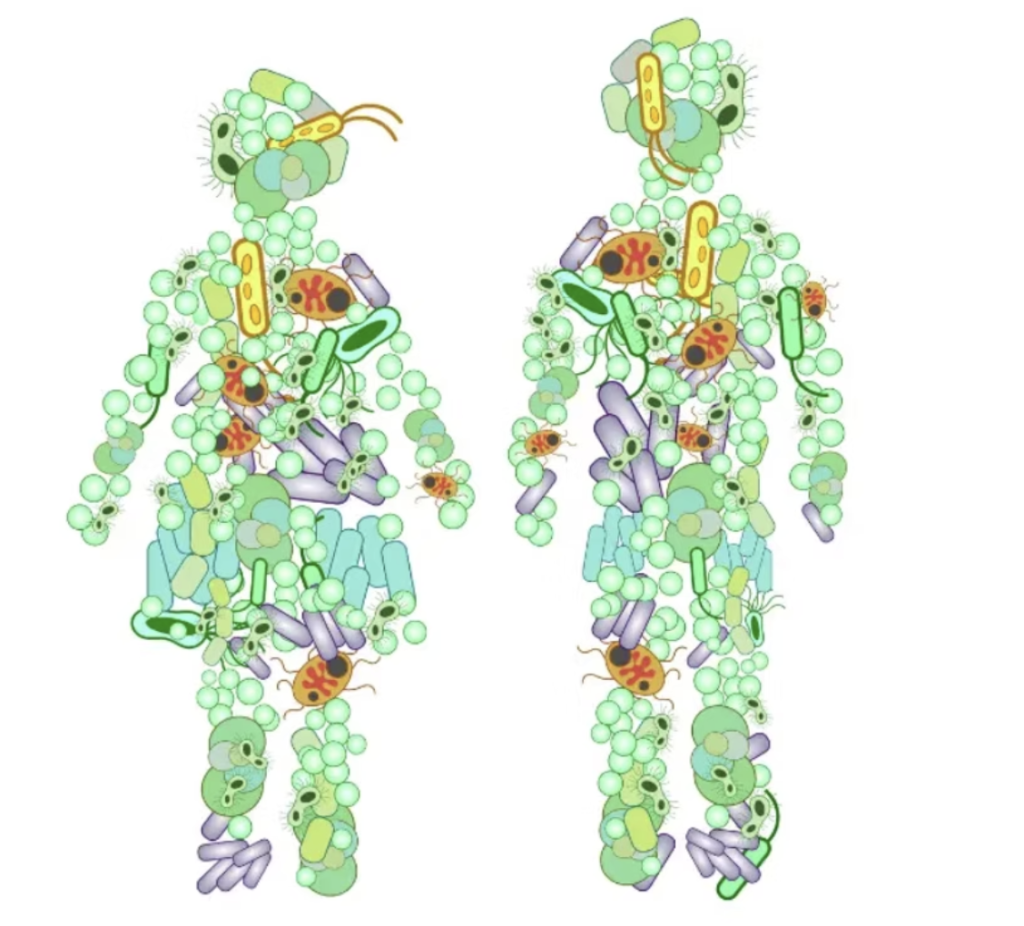
From the outside, the human body appears as a single consciousness, a single dynamic, a single organism. However, it is a universe of microscopic friends, home to ten times more bacteria than its own cells, and to whom it owes its own functioning. On your skin, in your mouth, nose, and intestines; trillions of bacteria, never leaving you alone in your body where you strive to be ‘one,’ are with you from the womb until your last day.
As their existence and then their effects gradually began to be understood, scientists started to incorporate them into their research topics using various concepts to gather more data. The concept of microbiota is the general name for these bacteria, as well as fungi, archaea, and viruses, that live within the body. The ecosystem they form through interaction is called the “microbiome.” The scientist who first defined the microbiome described an ecological community that included not only beneficial bacteria but also disease-causing bacteria or neutral bacteria that have no positive or negative effect on the body.
The Oompa Loompas in Our Gut
Our gut is the living space of a large part of the microbiota, the biggest factor in who we are based on what we eat. The process of turning what we eat into fuel for our bodies is complex. Numerous hormones, enzymes, and physiological pathways work together. Trillions of bacteria, their own digestive and metabolic products, affect the temperature, pH, oxygen, and in short, the conditions necessary for enzyme function in the gut, the environment where all these processes take place. Therefore, the smooth continuation of digestion is directly related to the number and quality of these bacteria.
Irritable Gut, Irritable Person
Although not considered a disease by the ‘modern’ person who works long hours, it is a syndrome that impairs the quality of life: Irritable Bowel Syndrome, or IBS for its universal abbreviation. This syndrome, which has symptoms such as chronic constipation, diarrhea, indigestion, abdominal pain, and bloating, is especially common in occupational groups where sedentary lifestyles and unbalanced diets are increasing. This problem, which has various causes, also has various solutions. While increasing daily activity and monitoring water intake may be sufficient for some, balancing the gut flora with a healthy diet is necessary for longer-lasting and more effective results.
Is balance achieved with yogurt or pickles?
Considering that bacteria also need nutrients, what we eat is as important for them as it is for us. Prebiotic fibers are vital for bacteria, and their intake from external sources is important. Foods containing probiotics, on the other hand, contain bacteria, not just provide food for them. These are also very important in terms of microbiota diversity and vitality. Because the ratio of beneficial/harmful bacteria is as important as the number of bacteria. And this ratio is maintained by protecting gut conditions, that is, by eating a healthy diet. Although the benefits of various diets on this ratio are still being researched, there is no single diet that is accepted and recommended by the majority. A nutrition plan should be created according to the individual, taking into account genetic differences, food intolerances, allergies, and daily lifestyle.
Exercise, regular sleep, a stress-free life, and minimizing or eliminating alcohol and smoking are methods proven beneficial by various studies. Therefore, gut health should be considered holistically and adopted as a lifestyle, rather than reducing it to a single factor.
In short, getting to know and helping to regulate your inner ecosystem isn’t dependent on a single golden rule. This process, requiring some research, trial and error, and patience, is a worthwhile effort that will contribute to your health. Making the trillions of micro-life within you happy will bring you unexpected benefits in addition to what you hoped for. Perhaps they are the ones with expectations, not you.
Hi, this is a comment.
To get started with moderating, editing, and deleting comments, please visit the Comments screen in the dashboard.
Commenter avatars come from Gravatar.