Biostatistics
Meta-analysis and Systematic Review Support
Study Design and Methodology Support
Research Model and Hypothesis Development
Power Analysis and Sample Size Planning
SPSS, AMOS, JAMOVI, Smart PLS 4, KNIME, JASP, R (RStudio), MAXQDA
01
Professional Data Analysis with SPSS and AMOS
Research data are analyzed, reported, and interpreted using SPSS and AMOS in accordance with scientific standards. In addition to descriptive statistics, reliability analysis, correlation, regression, t-tests, ANOVA, and other SPSS procedures, AMOS is used for confirmatory factor analysis, structural equation modeling, path analysis, and mediation models.
Throughout the analysis process, model fit indices, standardized path coefficients, significance levels, and hypothesis results are evaluated in detail. Contact us for professional support in SPSS and AMOS data analysis, statistical reporting, and interpretation of research findings.

02
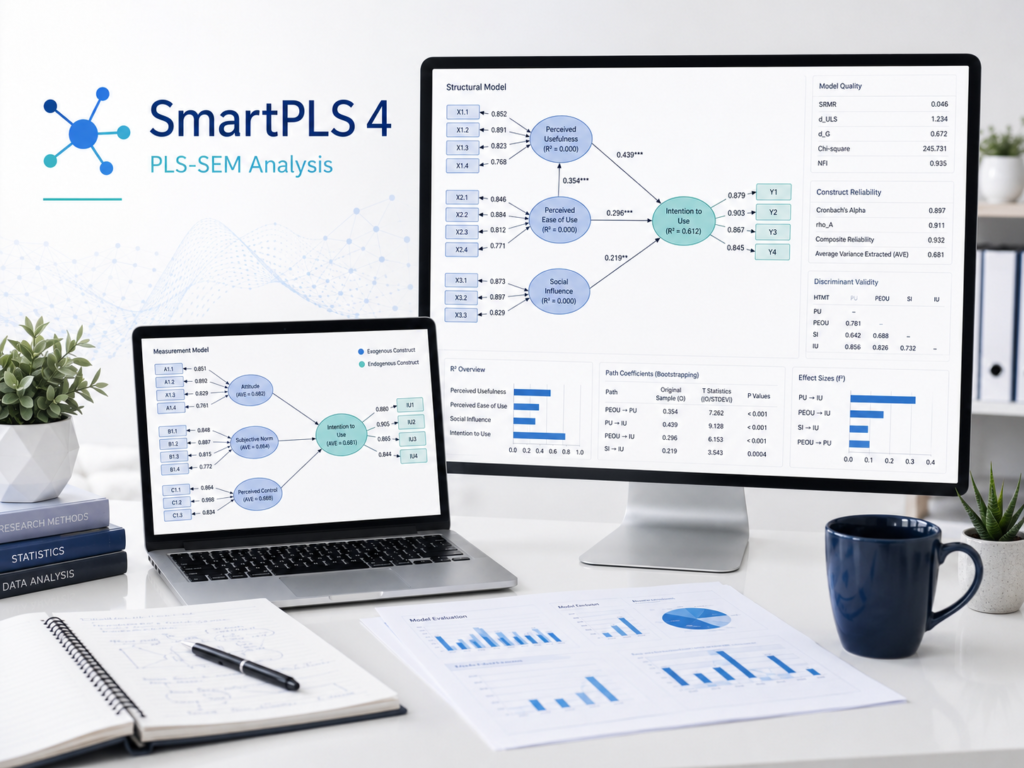
Professional Data Analysis with SmartPLS 4
SmartPLS 4 is used to perform Partial Least Squares Structural Equation Modeling (PLS-SEM) for complex research models. The analysis process includes assessment of measurement model reliability and validity, path coefficients, direct and indirect effects, hypothesis testing, mediation and moderation analysis, model fit evaluation, and importance-performance map analysis. Research findings are reported clearly and interpreted in accordance with scientific and academic standards.
03
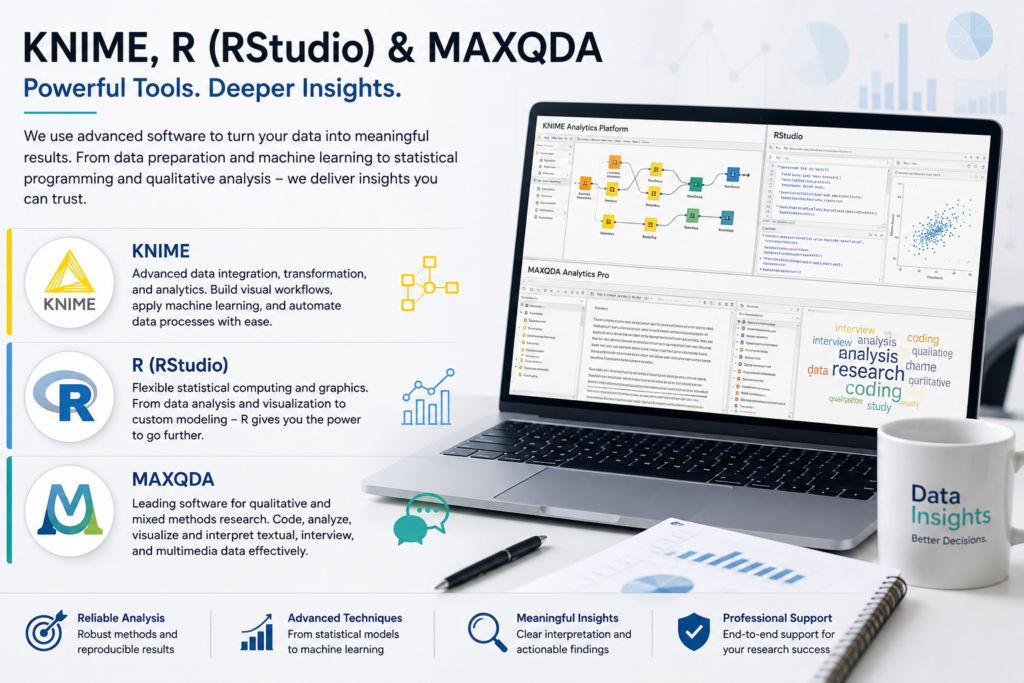
Advanced Data Analysis with KNIME, RStudio, and MAXQDA
KNIME, RStudio, and MAXQDA provide powerful solutions for quantitative, qualitative, and mixed-methods research. KNIME supports data preparation, integration, automation, machine learning, and visual workflow design. RStudio enables advanced statistical analysis, data visualization, predictive modeling, and reproducible research using the R programming language. MAXQDA is used for coding, categorizing, analyzing, and interpreting interviews, documents, open-ended responses, and multimedia data.
By combining these tools, research data can be examined from multiple perspectives and transformed into clear, reliable, and meaningful findings. Professional support is provided for data analysis, model development, visualization, reporting, and interpretation in accordance with scientific research standards.
04
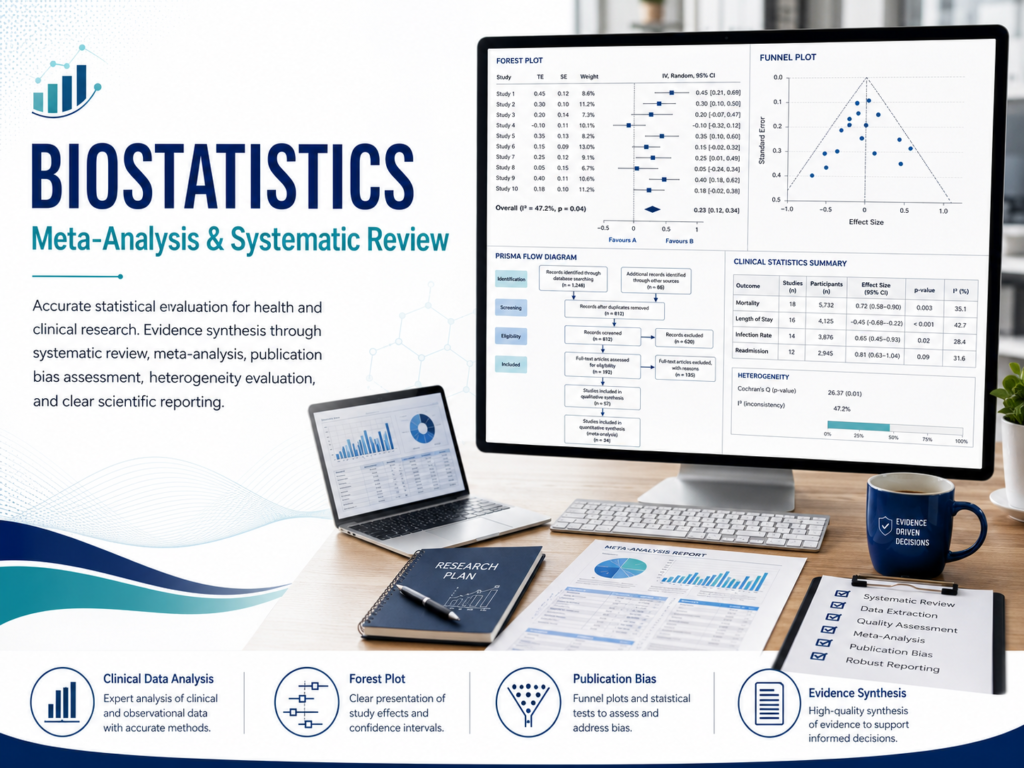
Biostatistics, Meta-Analysis, and Systematic Review
Biostatistical methods are used to analyze health, medical, clinical, and life sciences data accurately and systematically. The analysis process may include descriptive statistics, hypothesis testing, regression models, survival analysis, diagnostic accuracy assessment, and the interpretation of clinical research findings.
Meta-analysis and systematic review methods are used to synthesize evidence from multiple studies, evaluate study quality, assess heterogeneity and publication bias, and estimate overall effect sizes. Results are presented clearly, transparently, and in accordance with established scientific reporting standards.
Ready to Transform Your Data into Meaningful Results?
Share your dataset and research questions, and receive a clear analysis plan with publication-ready reporting.